What’s next for nature in Wales? With Deputy First Minister Huw Irranca-Davies
Date:
Summary
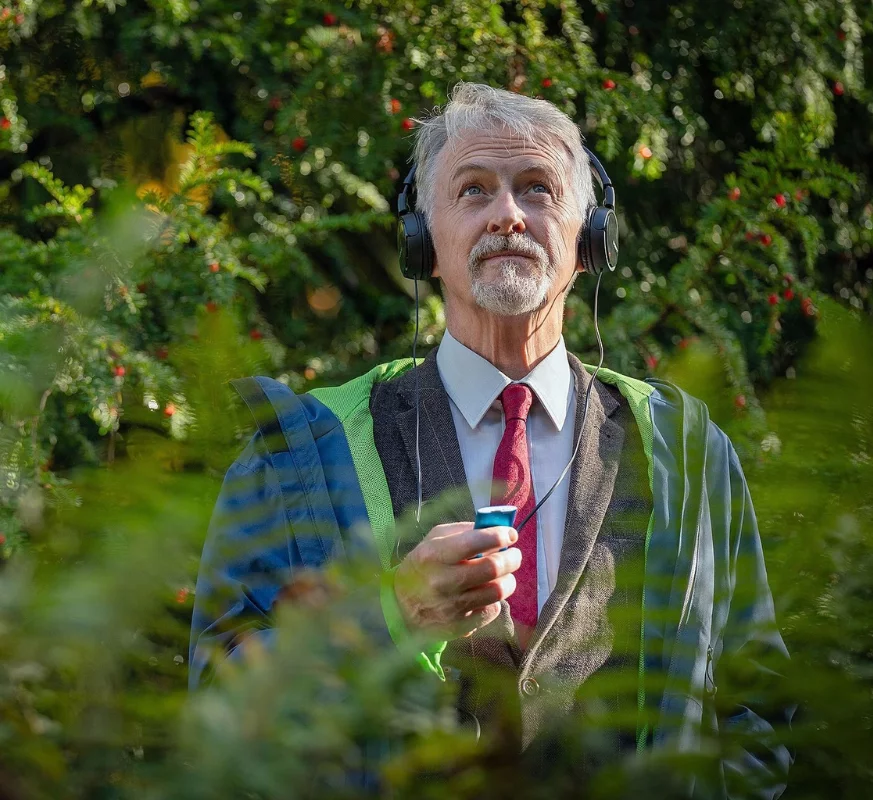
Wales has passed landmark legislation to strengthen environmental governance and restore biodiversity. Deputy First Minister Huw Irranca-Davies joins Green Alliance Senior Fellow Ruth Chambers to discuss what the new laws mean and what must happen next to deliver for nature.
Transcript
What’s next for nature in Wales? With Huw Irranca-Davies, Deputy First Minister of Wales and Cabinet Secretary for Climate Change and Rural Affairs
Ruth Chambers: Welcome to the Green Alliance Podcast. We are the charity and think tank dedicated to achieving ambitious leadership for the environment. I’m Ruth Chambers, senior fellow at Green Alliance, and I’m delighted to be joined today by Huw Irranca-Davies, a Welsh Labour member of the Welsh Parliament, Senedd, and Deputy First Minister of Wales. Croeso, Huw, and thanks for joining us today.
Huw Irranca-Davies: Diolch. It’s lovely to be with you. It really is. I’m looking forward to this conversation. Not quite sure where it’s going to go, but happy for it to go anywhere.
Ruth Chambers: Well, let’s see where we end up. I’ve been thinking back to when we first met. We weren’t quite in short trousers, but it was around 20 years ago and you were an MP, an environment minister at DEFRA, and I was working for the Campaign for National Parks. One of the brilliant things that happened on your watch as a DEFRA minister was the creation of the South Downs National Park, which strengthened environmental protection and economic outcomes across a really large part of southern England. But since being elected to the Welsh Parliament, you’ve led scrutiny of the Welsh Government’s environmental record when you were a backbencher, and you’re now Cabinet Secretary for Climate Change and Rural Affairs, which means you’re the lead government minister responsible for the environment, as well as Deputy First Minister. That’s been quite the journey and I’d love your reflections on any differences you’ve picked up over the years in how the UK and Welsh governments and Parliaments approach their work on environmental policy.
Huw Irranca-Davies: Yeah. Well, thanks for the opportunity to reflect a little bit because it has been quite a journey, and you are right. You and I, in different ways, have been at various times partners, collaborators, challenging each other, pushing to see how far governments can go. But I’ve loved every minute. I mean, that’s the first thing to say. What an enormous privilege it is to be elected to a position where you then get to be able to make a difference, particularly in the natural environment, and it’s become something of a specialism of mine.
I never thought it would be. My background before I came into Parliament was not within the natural environment. I had some background in it. My masters, many years ago in a different life when I had dark hair not grey hair, was in resource management. That was my introduction to, if you like, thinking on the natural environment and how we can use these resources in a way that, for this and future generations, doesn’t damage them.
So that started me off. When I came into Westminster and was fortunate enough to be put in as a DEFRA minister, serving under Hilary Benn, who was a phenomenal Secretary of State who wanted to do great things. He did not want to just serve in office. He wanted to make a difference, and one of those was building on the 40 or 50 years of campaigning to bring about the South Downs National Park. All those campaigners, volunteers, dogged people who had said they were not giving up on this. It was one of the post-war 1945 Labour government’s ambitions. It was never delivered at the time. They pushed and pushed, and Hilary Benn and I were in the fortunate position to be part of the legislative process of taking that through. And you’re right: recently there’s been a big impact analysis and it’s been phenomenally good for the environment, phenomenally good for the economy and for farming there as well. So it just shows when we put our thought to this, even when there’s opposition, nature can be a massive win for everybody.
Are there big differences? I mean, I loved what I did in DEFRA. I can genuinely remember sitting down at a dinner with one of the people who succeeded me from another party as a DEFRA minister and saying to him, ‘What did you do?’ Because when I was there, we did the environmental hill farm payments, we did the national park, we did the England coastal path and took forward the right to roam. And he said to me, ‘Nothing. We were told to sit tight, times were tough, do nothing.’ So it’s great when you’re in that position to be able to get things done.
Differences with Wales are, and this is why I wanted to come back to the Senedd and Welsh government: it is smaller and nimbler. It’s also got a high environmental ambition, which is one of the reasons I was really intrigued to come back here. We are the nation that has created the Wellbeing of Future Generations Act. So everything we do is through that long lens, not of political cycles but of the next generation as well. And on that basis, when you come back, you suddenly realise you don’t have to wait a month for a meeting with another minister to ask how we do the next big thing. You literally walk down the corridor and say, ‘Hey, got a bit of an issue with planning, with highway waste, with housing, whatever. How can we make this work?’ And within a fortnight you’ve got a plan together. So it’s smaller, it’s nimbler.
You also feel a cultural difference. The tradition in Wales, which I expected, but it’s been reassuring: people work together, they collaborate. It’s designed to be more cross-party, but it’s also much more intimate as a chamber. You genuinely do reach across and say, ‘How do we do something more effective for this species, this habitat? Are you willing to work with us?’ So that collaborative approach is quite different from the heads butting against each other in Westminster sometimes. But I think any government that has got the will to do it can make an enormous difference in the natural environment.
Ruth Chambers: That’s all really interesting and I recognise much of that as part of the community working on environmental issues in Wales and England. One of my observations is that the community is much smaller in Wales and that can definitely spark a really strong sense of team spirit and collaboration, but it can also lead to occasional capacity challenges, especially when ambition is high.
And I guess that’s played out a little bit in the journey towards Wales closing the gap in oversight and enforcement of environmental laws that was created when the UK left the EU. We got there in the end, after what I think was an eight-year journey, when one of your colleagues stood up for the first time in the Senedd and said that yes, we will pass laws to close this gap.
The Environment (Principles, Governance and Biodiversity Targets) (Wales) Bill was eventually passed by the Senedd in late February, and that was a real landmark moment, as I think you’ve said yourself. This bill will do three really important things: it will set up a new environmental watchdog called the Office of Environmental Governance Wales; it will embed environmental principles into Welsh law alongside that Future Generations framework that you mentioned; and it will build a framework to set new biodiversity targets, which are sorely needed, as Wales is sadly one of the most nature-depleted countries in the world. So what does this bill do, do you think? What does its passing mean for Wales and Welsh people?
Huw Irranca-Davies: I think it’s just a massive step forward. We often overuse the phrase ‘landmark legislation’, but this truly is landmark because it sets up a very independent regulator. I was listening to one of your previous podcasts last autumn where that was one of the things stressed, looking forward to this legislation: the desire to strengthen independence. And my goodness, we’ve done that, and we’ve done it in the way you described. This has not been a top-down piece of legislation where we said, ‘This is as good as you’re going to get when we introduce it, that’s the end of it.’ We’ve actually worked hand in hand with many across the environmental sector to see, if they thought they could improve this, whether we could work with them on it. And it’s one of the best examples I can offer of the way the Parliament works, quietly and assiduously, to strengthen legislation.
What it means is that this long-awaited legislation will give citizens much more transparency on the policies and decisions that people like me and public authorities are taking on their behalf to protect and to enhance nature and biodiversity across Wales. And if we’re failing, they can hold us to account through that independent organisation, through enhanced scrutiny, through meaningful targets that will be set, against which they can judge us. And I think that is why it’s landmark legislation: because it takes power out of policymakers and legislators like myself and says, ‘We’re handing this not just to an independent body, but to the citizens of Wales, who will hold you to account. We will applaud you when you do it right, but when you’re failing, we will be able to step in and say: you are failing, do something differently.’ That is immensely powerful. Scary as well, I’ve got to say, from a policymaker’s point of view, but it does mean that the work we’ve done collectively in strengthening the independence, the scrutiny, the oversight and the transparency means that any future minister, not just Huw Irranca-Davies, but any future minister and any future public bodies are really going to be held to account on what they do for nature and biodiversity and restoration of the places we want to see for people and for the planet.
It really does fall squarely within that wellbeing of future generations framework as well, because it’s a piece of legislation that in effect puts in place a better version in many ways of what we had under European protections, and also looks ahead to future generations. So I think we should be immensely proud collectively of what we’ve achieved with that. Now we’ve got to make it work. This is the start, putting it in place, making it work, but it’s a massive step forward.
Ruth Chambers: And I remember when you stood up, I think in one of the committee hearings, and challenged the sector and colleagues in the Senedd, and invited those who could find ways to improve the bill to come forward. We often hear that kind of offer from politicians and sometimes it feels like lip service rather than a genuine opportunity. But in this case it was the genuine opportunity you’ve described. And in all of my experience working on bills, this was probably the most collaborative experience I’ve ever had. So I couldn’t agree more that that ended up making the bill as good as it could be. We are really grateful to you for setting that kind of culture of engagement, and also to your really hardworking officials for all of the efforts they made over many months.
And it was good at the end to see the bill passed with near-unanimous cross-party support. That collaborative process underpinned its passage from start to finish. But we’ve got elections coming up in May, as you well know, and most of the heavy lifting on the bill will now fall to the next Welsh Government and the next Senedd. Although the implementation timetable is about as locked down as it’s possible to do in law, there are still choices to be made in the future. So what challenges do you think lie in store for environmental protection and nature recovery in Wales in the years ahead?
Huw Irranca-Davies: I’ll start with the very first point you make, and genuinely not as a political point but a very real one. I think one of the strengths of the legislation we took through was that it was very collaborative, with strong cross-party support. I hope that’s maintained into the seventh Senedd. I think that’s vitally important because the leadership that the Senedd has shown, since it began, its willingness to think outside the box and think about not just Wales’s leadership or UK leadership, but in some aspects global leadership. What we’ve done on recycling: we are the second best country in the world. That hasn’t happened by accident. Tough decisions were made and we worked with people in households across Wales and local authorities to make it happen. We dragged ourselves out of the bottom of the league tables. So we can do this, but these things require a degree of consensus. One of our first challenges, and I say this not only as a politician but as a citizen of Wales, is that we will need to work with all of those new candidates who appear in the next Senedd term to say to them: if you haven’t woken up yet, realise just what the scale of the mountain we have to climb is in terms of nature, climate, biodiversity, climate resilience, all of this. But also be optimistic: we can do it, because we’ve proven we can. We are showing, in some areas, signs of habitat restoration and species recovery. We need to give people hope, give new members hope that they can be part of that solution. So the first challenge is to make sure we continue in this direction where there is broad consensus: we need to do this stuff and we can do it.
Secondly, we need to be honest about the scale of that challenge. I’m always the optimist that we can do this stuff, and I believe always in a positive narrative because that will inspire people. But we also have to be repeatedly clear about the urgency of the situation we face. We can’t shy away from the tough decisions we will have to take to actually restore our habitats. We shouldn’t have any hesitancy. We should boldly address things like what we do with the sustainable farming scheme going forward, optional collaborative layers, the setting of targets and driving action towards them, support for things like nature network partnerships and all of that. We need to keep governments going on that, but recognise the scale of the challenge.
The second challenge is really to do with delivery on the ground. We can get all the right legislation in place, the right policies, the right targets, but we need sustained commitment and investment to do it. We think we can do some aspects within existing funding, for example within what we do with the sustainable farming scheme, if we can make it deliver for farmers’ livelihoods but also for nature and climate. But I think we need more in that space. So some of the discussions we’re already having, fruitful discussions not just with environmental stakeholders but between governments, are about high-integrity, credible additional investment that can be brought into nature, not just climate but nature. Delivery will require more investment, sustained investment, the willingness to take bold decisions on what we do with the Celtic rainforest, seagrass restoration, peatland and so on. And the other part of delivery is proper resourcing of capacity in local authorities, in Natural Resources Wales, the regulators, and then close partnership with those on-the-ground land management communities and the third sector. We can’t just wish this to happen. We’ve got to get the resource in there and build the partnerships to make it happen.
I think we’ve done well in Wales on this, but we need to make sure that nature recovery alongside land management approaches, alongside what we do with planning and with decarbonisation, are all integrated together. Because we’ve learned from the past record that if we do it in silos, we will fall short. We’ll actually compete amongst those objectives. Pull them all together and you can really move mountains.
And I guess the final one, and it is the big one, is about bringing people with us. Everything I’ve done while I’ve been in post here, as in DEFRA and in various other roles, has been rooted in the recognition that you can’t do stuff to people, you’ve got to do it with them. And that does mean some honesty: talking about the challenges and the opportunities, talking about the optimistic worldview that we can do this, but then actually saying, are we all on the same page? Here’s how we’re going to do it. Put your ideas in. The environmental leadership and the change we need needs to be rooted in our communities, rooted in people, not imposed upon them. So that’s the other big challenge, beyond the policy and the legislation. But I’m genuinely optimistic. The challenges are massive. They’re real. But so is our ability, as well as the spirit, to do it. We can genuinely move mountains and we’ve got to say that to people. We’ve got to persuade people we can do this.
Ruth Chambers: Thanks, Huw. And speaking of mountains, as you did a few times there, there are plenty in the Welsh landscape. The environment of Wales is not only hugely important to people and to the economy, it’s spectacular and awe inspiring in its own right. Where are some of your favourite places, if you don’t mind sharing them with us?
Huw Irranca-Davies: I’d love to say. It is hard, but I do have some favourite spots. I was born on the north Gower. If people know the Gower, they normally know the sandy beaches on the south, and they are spectacular: wave-cut platforms, pebble beaches. But I was actually born on the mud flats on the north. So my favourite areas of the Gower, and it’s not a coincidence that some of the best pubs are there as well, are walking, strolling, cycling, hiking and overnight camping on that north Gower stretch to Worm’s Head, with that incredible steel lighthouse structure still stuck in the middle of the sea in the Burry inlet, past the clock, past the wildlife and bird life on that estuary. Some spectacular landscapes. That’s one of my favourite places in Wales and I still return there regularly to walk, and even do midnight walks when there’s a full moon out. It is spectacular.
And the other one is probably what you can see behind me, whether it’s in the snow or in good weather: walking a ridge called Fan here, the long ridge. It’s one of the Carmarthen Fans, where you walk from the Swansea Valley from a lovely little pub, there’s a theme developing here, called Tafarn-y-Garreg, the tavern of the rock. And you walk up this ridge for a long time until you get to the end where the wind is blowing and you look out across mid-Wales and Carmarthen. So whether it’s the hills or whether it’s the mud flats, I’m definitely at my happiest out there in the wilderness somewhere, enjoying it. That puts the whole world into proper perspective.
Ruth Chambers: Especially if there’s a pub waiting for you at the end. And I’m surprised I haven’t bumped into you at Tafarn-y-Garreg because I love that part of the world too. Although I think one of my happy spots is a ridge you’ll know called Crug Hywel, which comes up to Pen y Fan, but looks into the most wonderfully wild valley called Cwm Crew. It’s not very far from where you’ve just described. So, final question to wrap up the podcast: thinking ahead after the election, you talked earlier about sharing perspectives with somebody who came after you in the DEFRA brief. For whoever is the next environment minister in Wales, and we have no idea who that might be, if you had a message or two, what would they be?
Huw Irranca-Davies: I would say to the next incumbent of this privileged position: be bold. Enjoy it. Do things that make a difference. Work with others, not because you want to be the brightest person in the room, but because your job is to bring together those bright people with the right ideas and then lead. Don’t just tread water or follow what they’re doing in other nations. Think about where Wales can lead next. That’s why I came back to Welsh government and the Senedd: because we were doing exciting things. There will be a next chapter to be written. So I would say to the next person sitting in this seat: buckle in, do exciting things and work with people to make it happen. It’s an enormous privilege. I’ve enjoyed it thoroughly and I’ve enjoyed the toughest times the most. The hard work is the best thing of all. So I would certainly say to the next person in this seat: don’t have an easy time. Really go for it with ambition and then draw people into the mission that you are on.
Ruth Chambers: Thanks, Huw, and thanks for joining us today. And well done on getting the Environment (Principles, Governance and Biodiversity Targets) (Wales) Bill passed before the Senedd dissolves.
Huw Irranca-Davies: Thank you, Ruth. It’s been a joy. It really has. Thank you.

Related content
View AllLegislation and Governance Unit
How does conflict abroad shape energy, costs and climate choices at home?
1 April, 2026
Inside Westminster’s environmental watchdog with Toby Perkins MP
10 February, 2026
Looking forward: what will 2026 mean for UK environmental policy and politics?
13 January, 2026