Overview
The shift to a green economy is reshaping the UK labour market. New industries are growing, existing ones are changing fast and demand for skills that didn’t exist a decade ago is rising across sectors from clean power to law. But young people are being left behind: skills shortages are widening even as youth unemployment climbs.
Green Alliance has been tracking this challenge, examining where the entry level jobs will be, which skills employers need and how to connect young people, especially those from marginalised communities, with meaningful pathways into this workforce.
Getting young people into green jobs

These two reports make the case that young people want to work in the green economy but are being held back by poor information, inaccessible training, and a lack of clear routes in.
Green shoots: growing the green workforce of the future
Green shoots maps where entry level green jobs will emerge across the UK in power, the circular economy, and nature restoration, and shows how targeted work placement schemes could connect those opportunities with young people currently outside the labour market.
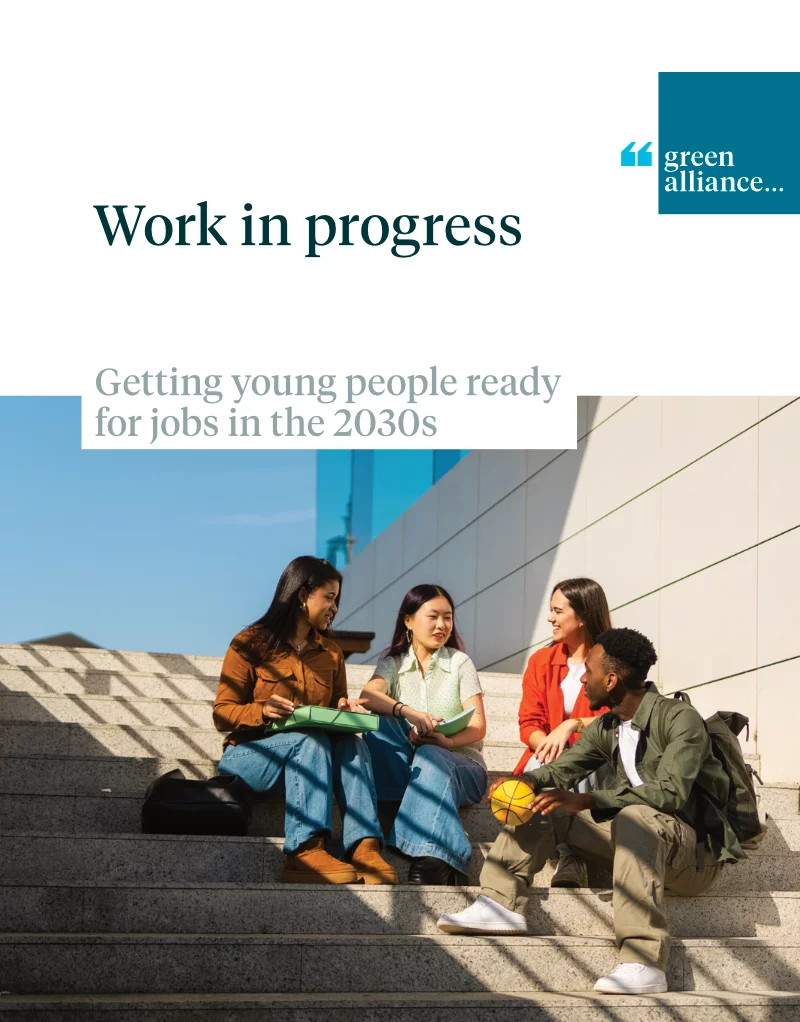
Work in progress: getting young people ready for the jobs of the 2030s
Work in progress updates the picture with new analysis of the skills employers will need by the mid-2030s, the effect of AI and automation on green roles, and fresh evidence from focus groups with young people across the country on what they actually think about green careers.
Filling the retrofit skills gap

Decarbonising UK buildings will require between 120,000 and 230,000 new workers by 2030, more than any other net zero area. But progress on building that workforce has been slow, and domestic training alone won’t be enough. This working paper, co-produced with ODI, examines five ways immigration policy could help.
Related content
View AllSwitching the UK on to heat pumps
21 June, 2013
Work in progress: getting young people ready for the jobs of the 2030s
20 May, 2026
What did the budget mean for the environment?
2 December, 2025
A plan to support electric vehicle manufacturing in the UK
24 October, 2025