Summary
What does effective environmental scrutiny look like in parliament?
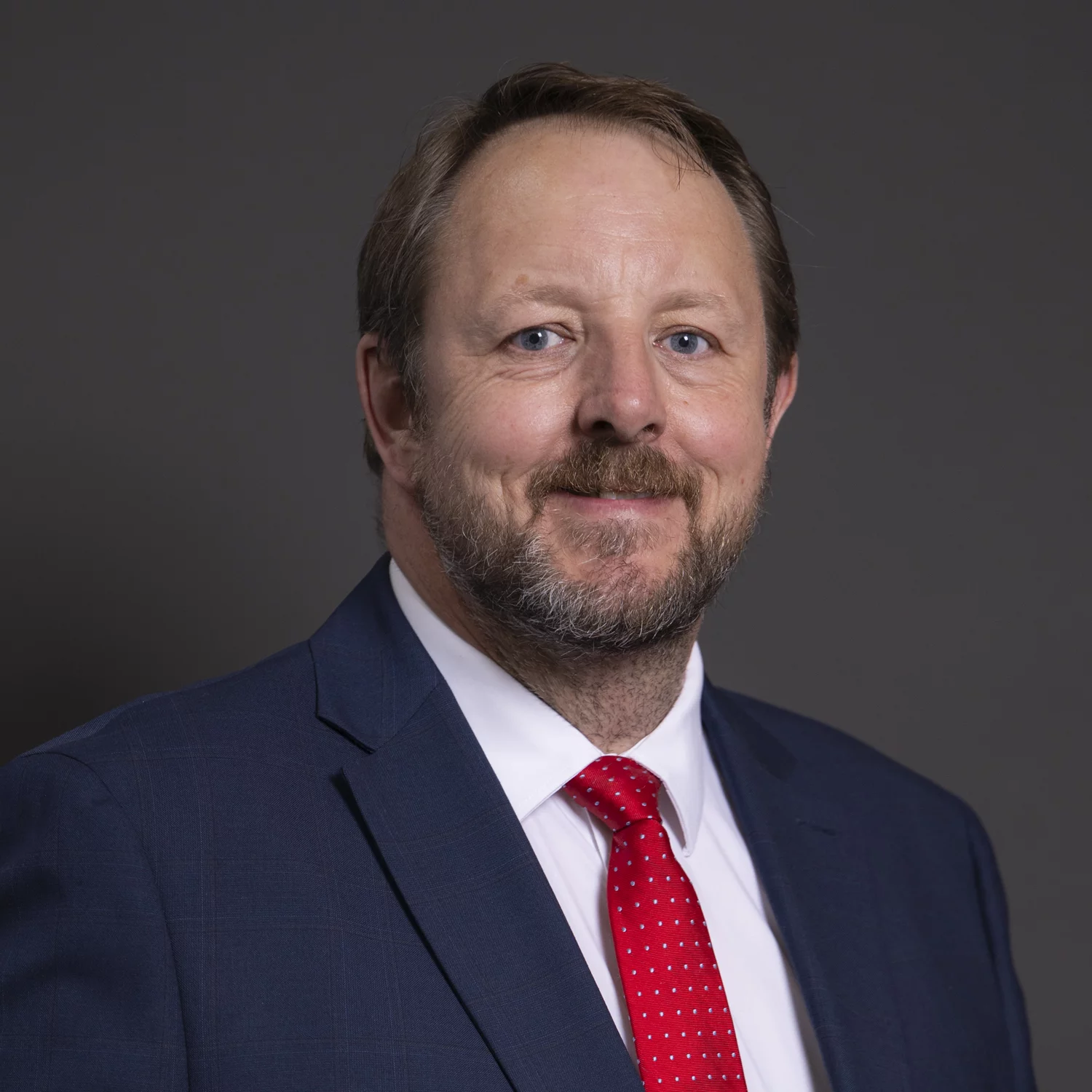
In this episode, Toby Perkins MP, chair of the Environmental Audit Committee, joins Green Alliance senior fellow Ruth Chambers to discuss cross party working, real time influence on legislation and how committees can drive change, even when government resists.
Transcript
Ruth Chambers: Welcome to the Green Alliance Podcast. We are the charity and think tank dedicated to achieving ambitious leadership for the environment. I’m Ruth Chambers, senior fellow at Green Alliance.
I’m delighted today to be joined by Toby Perkins, MP for Chesterfield and chair of the Environmental Audit Committee. Hi Toby, thanks for joining us.
Toby Perkins: Thanks very much. Great to be with you, Ruth.
Ruth Chambers: You’ve been chair of the cross-cutting House of Commons Environmental Audit Committee since September 2024. I know you may be biased, but is that one of the best jobs in Parliament?
Toby Perkins: One of the things that I really enjoy is the extent to which we can look at any department, any issue, particularly those within departments that might not see the environment as their main issue, but to ensure that they understand the environmental commitments that the government has are legally binding and they’re a responsibility of every single minister. I think we’ve got a great committee. We find that people who join the Environmental Audit Committee are always surprised and delighted by how broad the scope is. Unlike other select committees, the Environmental Audit Committee has really helpful supporters who recognise that it isn’t a committee that exists, in the way that other committees do, just because they’re shadowing a particular department, but that to an extent, we all need to fight to ensure it remains relevant and has a role to play. I think there are helpful supporters like yourselves who recognise that we can reach the parts that other committees don’t.
Ruth Chambers: That cross-cutting nature has really been reflected in the ground that you’ve covered. In the first 18 months of this parliament, you’ve published reports on airport expansion and climate and nature targets. You’ve looked at flood resilience, housing growth, and you’ve got live inquiries on a really hot topic, PFAS forever chemicals and air quality amongst other things. Where do you feel in amongst that broad list of activity that you’re having the greatest impact and could you tell us about some of the different ways that you conduct your scrutiny? For example, even the letters that you write to government departments.
Toby Perkins: I think within the housing and planning bill, that was one area where we looked at this as the very first issue that the committee looked at. At the time that we started looking at this, I think we were deeply alarmed about the shape that the planning bill looked like it was going to be taking, that it was going hand in hand with a new planning policy framework. We were concerned about, and if you look at the sort of scale of the concessions that collectively we won from government, I think our committee’s scrutiny work played an important part in that. Because, you know, I think it was across sectoral effort. But I think we ended up with a housing and planning bill that was, you know, tremendously improved from what we were looking at. It was one of those unusual situations where a select committee wasn’t just responding to what’s already happened, but was sort of live shadowing a piece of legislation as it developed. I think the legislation was vastly improved for that work. I think that that was a particular area where I think that we were able to change the policies of the government in real time.
I think in terms of the work that we do, the select committee relies on that quality of scrutiny and the quality of the witnesses. We spend a lot of time thinking about who it is that we’re going to have in front of us. I think we force ministers from departments that might consider themselves to be non-environmental, that might not consider the environment to be their day job, to actually consider those environmental issues. I think we did that very well on the planning bill.
But in terms of the processes that we follow, there is much of that that happens, you know, away from public scrutiny. We give a lot of time thinking about what the subjects are that we are going to choose and making sure that they are ones that have that across governmental approach, which is why we’ve not spent lots of time looking, for example, at the government’s clean energy plan because that is very directly DESNZ’s work. But we tend to look at issues like aviation, like housing, other transport issues, chemical issues that are across different departments. I think that’s a real strength of the committee, but we have to choose the subjects, we have to think about the terms of reference, try not to make them so broad that we never get into detail on anything, but also make sure that they’re broad enough to be interesting.
We receive those written submissions, which are so important. As I say, we have to choose the witnesses. We have to decide what to ask and we have to decide what to see. We do quite a lot of visits within the committee. Within the PFAS inquiry, we went over to France to learn about the work that they’ve been doing on forever chemicals there. We also went up to visit a community affected by this in North Yorkshire. So we have to think about where we go and see and how we build the knowledge base of the committee to ensure that our recommendations actually stand up to scrutiny and have strong expert advice behind them.
Then we have to negotiate the report. You know, we are a cross party committee with people on it from all aspects of political thought. We have to end up with a set of recommendations that we can all agree on, even though we might arrive at an issue with different ideas as to what we think government should be about. And then after we’ve produced that report, we have to promote the findings, try and make sure it has some impact, and then we get the response from government and it’s our job then to make sure we respond to that response. There’s a tremendous amount that goes into providing that scrutiny that people will see on a Wednesday afternoon sometimes.
Ruth Chambers: It is a never ending process, isn’t it? That role that parliament and committees like yourself play in scrutinising the government. Obviously you’ve got a great team behind you as well led by a clerk with experts and specialists and communications advisers to support the work. Clearly you are having some really welcome impact. But in some areas the government appears less willing to listen, for example, on tackling embodied carbon in building regulations or arguably in relation to some of your recommendations on airport expansion. What happens when your recommendations are ignored? What can you do when ignored?
Toby Perkins: There’s two things to say on that. The first is that we understand that committees make recommendations and ministers decide, and ultimately that’s the burden that they have weighing up their responsibilities. If we think that the answers to our reports are evasive, then we’ll push back and try and pin government down to make sure we understand their answers. If we think that their answers are plain wrong and don’t respond to the evidence we’ve heard, then we might once again draw their attention to the evidence that we’ve heard and ask them to comment on it. But we of course recognise that the point at which they are free to reject a recommendation that we’ve made so long as they explain why they’re doing that.
But I think it’s also important that our reports, our recommendations and the government’s responses are all public information. We sometimes are able to pin ministers down and get answers, even if they’re not the answers that we want or we think they should be giving, that other people have been unable to do. The clarity that people and other organisations have been able to get, and sometimes that could lead to an evidence base in the most serious cases for potential judicial review. Because we might have actually helped in terms of the information that’s on the record then.
Ruth Chambers: You mentioned the cross party nature of your committee. I was just doing some quick counting and I think there are five political parties represented on the committee. You yourself, as a Labour MP, a member of the governing party, do you feel that that helps or hinders your role as a scrutineer of government?
Toby Perkins: Well it can be a bit of both, I think. Obviously it can make relations a little bit difficult if a minister and most of these ministers are friends of mine and people I’ve known over many years, if they feel that you’ve not been as supportive as they might have hoped. I think some ministers are coming to grips with the fact that select committees ask them questions that might make them uncomfortable at times. But select committees are at their best when they’re patiently and diligently weeding answers out of witnesses, particularly those who don’t want to commit too far. We shouldn’t be hostile. I want everyone who comes in front of the committee to feel they’ve been treated with respect, that they’ve had an opportunity to make their case, but also that they’ve been confronted with the questions that test out their viewpoints and prejudices and hopefully ensure that people who’ve listened to our hearings go away better informed on the thought process behind government policy and why they’ve come to those conclusions.
I also think that having been a shadow minister in the Defra department and also there when some of these policies were being developed in opposition, it does give me a sort of a unique perspective as to what the genesis of these policies was, what was originally planned. If the policy that’s delivered in the end is different to what we were saying in opposition, I can give that due consideration and test out why it’s now changed. I think that gives me a useful insight.
An example of that will be on the issue of bottom trawling. You know, I was there repeating the words of the shadow secretary of state at the time, Steve Reed, which were pretty unequivocal on bottom trawling. Once in government, the government, you know, initially was very coy then appeared to be coming out pretty robustly on bottom trawling and then ultimately, I think delivered less than what was being expected. I think having been there and being one of those people who was sort of tweeting out loyally the message about what government’s going to do on bottom trawling gives me a useful perspective to then say to ministers, well, why aren’t you doing what we said?
Ruth Chambers: Thanks for all of those insights and certainly as somebody who’s appeared before the committee, I recognise very much the way in which you’ve described how you treat witnesses, with forensic but gentle scrutiny and sometimes especially with government ministers, some slightly harder edge scrutiny, which is very welcome from our perspective.
Toby Perkins: You know, there are select committees over the years that have been too sort of in love with the idea of being rude to witnesses and trying to get little quotable sections. I don’t really see that as the role of select committees. I think, you know, we should be there to try and make sure that people walk away knowing more than they came into it with.
Ruth Chambers: Recently you did a kind of version of Dragons Den, didn’t you? To try and extend the reach of the committee into the broader public and get their ideas about what your future work programme might be. Did you feel that was a helpful exercise?
Toby Perkins: It was a brilliant exercise. Yeah. I think the quality of submissions was really fantastic and we went into it thinking we might end up with one study. I think we’ve come out in a way with four, so we’ve already started the review into air quality, which was kind of the winner. We’ve already committed to doing a review into data centres starting in the late spring of this year, and we’re also doing one-off sessions into peatlands and woodlands. I think we got some great ideas out of that. From what I understand, people who fed into the process were really pleased with both the quality of those submissions, but also the conclusions that we came to. I think that was a really valuable exercise. The fact we had over 200 submissions just again shows the extent to which the sector looks to the Environmental Audit Committee and really sees it as an area to bring these important issues.
Ruth Chambers: I’ve definitely heard that feedback too from colleagues that made submissions on air quality and peat, and the fact that, as you say, you’re doing a new inquiry on air quality and air pollution, and you’re able to weave some of those other issues into one-off sessions. That really helps keep those issues live.
Just moving outside Westminster for a minute. I know that you’ve been able to involve colleagues from other select committees in the Commons, for example, by either inviting them to sit in on your hearings or conversely attending some of their sessions. But do you think there’s scope to collaborate a little bit more outside the Commons with parliaments elsewhere in the UK who have committees doing a similar job to yours, but also perhaps working with colleagues in the House of Lords where there are also committees looking into some of the same sorts of issues?
Toby Perkins: Yeah, I think probably there has been more collaboration with other Commons committees than either the other place, as we call it, the House of Lords or the devolved administrations. I did appear as a witness on a committee at the Greater London Assembly looking at airport expansion and wanting to utilise some of the evidence that we had heard, which was an enjoyable experience. But I think there is scope to do that more as well as those in other parliaments across Europe.
Particularly too in our PFAS study, we visited the French parliament. We had a fascinating meeting with their sustainable growth committee to learn about the work that they’d done on PFAS. They’d actually brought forward quite interesting legislation or maybe a couple of years ahead of us in that policy area. So that kind of cross governmental parliamentary work can help us to stand on the shoulders of giants, so to speak, and utilise that expertise that already exists. We had interesting meetings with parliamentarians from Germany and Norway at COP 30. So I think there’s a lot of value in that and I think that the whole issue of EU divergence is a very pertinent one right now.
The extent to which this government and its predecessor wanted to make the case that being outside of the EU could make us more ambitious rather than less ambitious than some of our European competitors and colleagues. I think with the Environment Act and policies like biodiversity net gain, you know, we’ve had elements where we have been groundbreaking, but then there’s other areas where we’re falling behind the EU. So I think it’s useful to think about how we actually work to learn from each other across parliaments. But I do agree with the central point that we should work more closely with the devolved administrations too.
Ruth Chambers: Great. Well, let’s hope that can happen after the elections in Wales and Scotland in May are coming up soon. So maybe let’s just finish off then, Toby, by looking ahead to the future, so the rest of this parliament. We never quite know how long we have left of the parliament, but we’re assuming it’s about sort of three years. As we’ve both heard from the Office for Environmental Protection, the oversight body that holds the government to account on its environment act targets and environmental commitments, the government is largely off track on delivering most of those targets and commitments. The OEP has said that in its annual progress report and indeed directly to your committee in oral evidence.
Just before Christmas, the government published its new environmental improvement plan, which I think is generally seen by most of us as being better than its predecessor, although there are still gaps and details lacking. As ever, government can only move forward as one, and some parts of government still seem to view the environment as a blocker to growth. So there’s lots to think about in there. This parliament will end just as we start to reach those critical 2030 nature targets. Do you have a sense of what needs to happen in the next two to three years to get us back on track?
Toby Perkins: Well, goodness me so much. Firstly, as you say, this needs to be a cross governmental priority. I think on climate change, you can see that it absolutely is on nature. I’m not sure we can say the same. If it doesn’t have the full weight of government behind it, Britain won’t get back on track with these targets.
I think specifically within the sort of Defra brief, I suspect nature friendly farming is still the biggest opportunity to really shift the dial and change the opportunity that we have on nature. I think marine is finally starting to get the focus that it needs, but we need to see a lot more movement on marine also. We need that enforcement of the laws that we have and make sure that we have the regulatory oversight and heft. I think the government priority and action on water is important, but it feels like water has so dominated EA’s focus, that we need to ensure that the Environment Agency have the ability to provide that sort of regulatory oversight and enforcement action to send a message in those other areas.
I also think that the political consensus has crumbled and this makes it more difficult for government. I think we all, those of us who will always press the government to do more must sort of recognise that that is the political reality that we are now operating in. So our select committees and the NGOs and the sector more generally need to recognise that in this new political landscape, we must of course continue to be demanding but also relentlessly encouraging. Because if we look like we’ve given up hope, it just makes it easier for those who would make a political case that the whole thing is hopeless, we shouldn’t bother. We’re actually making their jobs more difficult.
So we need to be relentlessly encouraging because, you know, my certain view is that the alternative to this government will not be one that takes these issues more seriously, but one that suggests that the whole thing is a waste of time. We need to celebrate the successes. We need to constantly say that the actions that we have taken have made a difference, that there is an economic future along the lines of the really progressive steps that have been made, not just by this government, but other governments in issues like biodiversity net gain, like the commitments of the Environment Act that these things are working.
I think getting that balance right between being committed to getting government’s actions back on track, but also continuing to trumpet the successes that we’ve all had environmentally since 1992 and beyond, is a really important balance for my select committee to make, but also for the sector much more generally.
Ruth Chambers: Demanding and relentlessly encouraging. That’s a great line to finish on. Thanks for joining us today, Toby, and thanks for all of the work that you and your committee does.
Toby Perkins: Well, thank you also, and thanks for the opportunity to take part in this podcast. You know, Green Alliance does an incredibly important role and I look forward to working with you and hopefully I’m sure scrutinising your work in front of our committee again in the future, Ruth.
Ruth Chambers: Thanks Toby.
Thanks for listening. Look out for more episodes from Green Alliance on your podcast feed. You can subscribe on your favourite podcast app, or you can follow us at Green Alliance on LinkedIn and Blue Sky. Please do use the hashtag Green Alliance Podcast to join the conversation and share your thoughts and ideas. Until next time.

Related content
View AllHow does conflict abroad shape energy, costs and climate choices at home?
1 April, 2026
What’s next for nature in Wales? With Deputy First Minister Huw Irranca-Davies
17 March, 2026
Looking forward: what will 2026 mean for UK environmental policy and politics?
13 January, 2026
In conversation with Chris Packham and experts: are we losing our environmental rights?
27 November, 2025